

Tip of the Spear: Dana Warren, Venture Partner at Canaan
January 8, 2026
By The Artemis Fund
The Artemis Fund believes technology can create prosperity for all. With offices in New York, Texas, Massachusetts, and Nevada, Artemis leads seed rounds for companies creating resilient families, individuals, and businesses across the US.
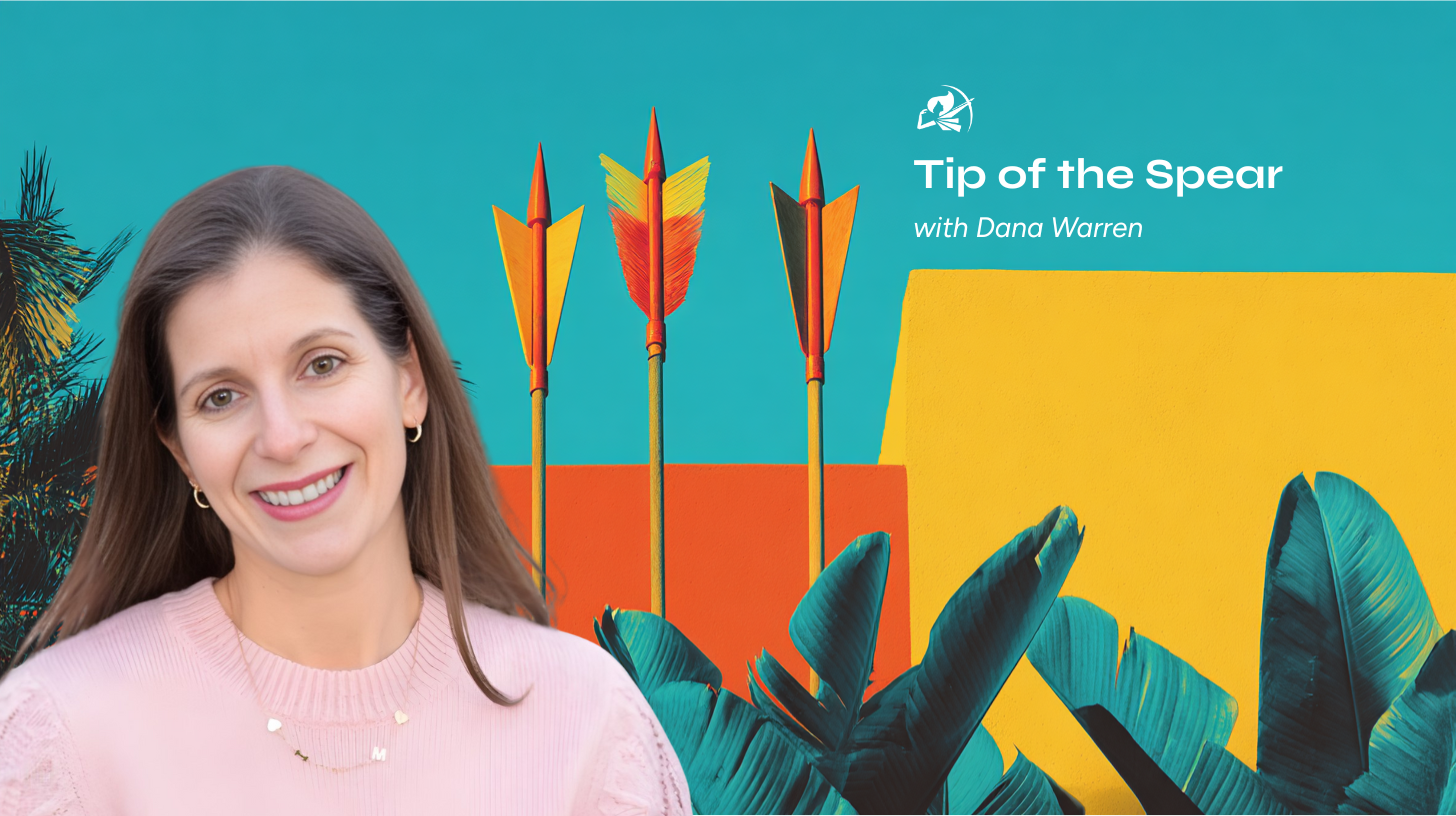
Tip of the Spear is an interview series highlighting The Artemis Fund’s expert network. In this edition, we sat down with Dana Warren, Venture Partner at Canaan, former Advisor to Anthropic and leader at Amex, Paypal, Stripe.
Get The Artemis Fund’s stories in your inbox.
Get The Artemis Fund’s stories in your inbox.
Sign up for our newsletter
Q: You've led revenue, marketing, and partnerships across some of the biggest names in fintech — AmEx, PayPal, Stripe. When you look back, what's the common thread that's shaped how you lead and build?
A: Two common threads: people and purpose.
On people: I've learned to work for exceptional leaders with no exceptions, partner with colleagues who complement your skillset and push you in uncomfortable ways that manifest their respect for you, and hire A+ talent always. The quality of who you build with determines everything.
On purpose: it's about serving a highly valued customer need. At AmEx, I learned that merchants don't wake up wanting payment processing. They want higher spending, loyal customers. At PayPal, I saw how removing friction at checkout while growing basket sizes could unlock entirely new business models. At Stripe, expanding partnerships with Shopify and Salesforce reinforced that the best distribution happens when you're solving a problem your partner's customers already have.
Exceptional people obsessed with real customer problems is the formula, and a healthy sense of humor doesn’t hurt.
Q: What pulled you toward working with earlier-stage founders? Was there a moment when you realized that was where you wanted to spend your energy?
A: My husband jokes that the more senior I got, the less real estate my employer gave me. At AmEx in 2010, I had this gorgeous mahogany office on something like the 50th floor. When I started at Stripe in March 2020 (yes, at the beginning of NYC lockdown) all I got was a computer and the right to self-board.
More recently, we joke that the longer I work in financial services, the smaller the company I work with. When I started at AmEx in 2008, there were 60,000 people. I've been spending time with a founder who hasn't even recruited his technical lead yet. He's constantly demonstrating exceptional founder-market fit and pushing my thinking on the future of commerce.
So there wasn't a moment. It's been a gradual 20-year progression. But Stripe introduced me to technical startups and the venture ecosystem. While at Stripe, a user’s CCO actually asked me to join a startup advisory board he sat on after we did a deal together. He saw what I didn't see yet: that my operating experience across the payments value chain, building world-class GTM teams, and working in varied corporate structures would add tremendous value to early-stage founders building generational companies. I’m sure glad he asked me to do that!
Q: At Stripe, you helped build partnerships with companies like Shopify, Xero, Mindbody, and Salesforce. What did those experiences teach you about how real distribution and scale happen — and how can early-stage founders create similar leverage?
A: Strategic partnerships work when parties commit to co-mingling economic futures over a multi-year horizon. They co-develop roadmaps, drive mutual distribution, and often provide proprietary technology at superior margins. But most folks skip the most important step: unearthing both partners’ top level goals and defining them to the point of discomfort.
Common partnership goals include: expanding market share by accessing new customer segments, increasing revenue through higher ROI channels and reduced CAC, enhancing product roadmaps through shared technology and data, and enabling brand awareness in new markets.
So whether we were kicking off or reinvigorating/ expanding an existing partnership with Shopify, Xero, Mindbody, Salesforce, and others, we aligned on KPIs. Both parties answered: "What about this partnership will make you a hero at your company?" Being this upfront feels uncomfortable, but it's how you align on the deepest level and avoid wasting time.
For early-stage founders, my advice for partnership is go slowly to go fast. Define your goals together, establish clear KPIs, and deliver measurable results. This is how you become an integrated part of your partner's growth strategy, a valued thought partner, and influence roadmaps on both sides. That's real leverage, and you can convert that into tremendous growth.
Q: Now that you're in venture, what do you think founders most need to understand about getting customers efficiently and scaling?
A: The biggest gap I see is conflating early customer traction with having a repeatable, scalable GTM motion. Many founders raise a seed round after getting to 10-20 customers through founder-led sales, personal networks, incredible hustle, and more recently, mind bending applications for AI that transform the margins of their customers. But here’s the rub: two years in, I often see that early users come from wildly different channels, use cases, or buyer personas. When venture tries to scale, nothing works consistently, because they haven't actually figured out the repeatable playbook yet. When you scale, referenceability is one of the most efficient drivers of scaled sales, and that's only available if your users have similar problem statements.
With this in mind, founders need to understand and apply ruthless prioritization to their ICP, hire for the motion they’ve proven, and tweak on the margins as they grow.
The meta-point: efficient scaling comes from focus, repeatability, reflection, and enhancement. Not from doing more things at once.
Q: For startups selling into enterprise or regulated industries, what's something you wish more founders understood about how those buyers actually make decisions?
A: Enterprise buyers don't buy software, they buy risk mitigation and career safety. Your champion isn't just evaluating your product; they're putting their reputation on the line. If you break, fail an audit, or create a compliance issue, it's their head on the chopping block.
Most founders miss this and focus only on product features. Here's what actually wins deals:
- Know your customer obsessively. Read everything about the company like earnings calls, SEC filings, press releases, LinkedIn updates. This is how you understand their priorities, risks, and watchouts. You need to speak their language and tie your solution to what keeps their executive team up at night.
- Map the org chart early. Who is the buyer? Who's the influencer? Who has a competing solution they're championing? How are decisions actually made, and what's the timeline? Enterprise deals involve 8-12 stakeholders. If you're only selling to one person, you're going to lose.
- Understand their product launch cycles. Enterprises plan in quarters or annual cycles. You won't change their roadmap so plan appropriately. If they're locked into Q1 priorities, position yourself for Q2. Fighting their planning cycle is a losing battle.
- Know your stuff cold. Security questionnaires, compliance frameworks, integration requirements, SLAs and you need answers ready. Fumbling on the details signals you're not ready for enterprise, and buyers will ghost you fast.
The meta-point: enterprise sales is about making your champion successful and de-risking their decision at every turn. Lead with that, not with how innovative your technology is.
Q: You've helped companies move from early traction to repeatable growth. What are a few practical things founders can do to build that kind of consistency in their go-to-market motion?
A: I find myself asking founders the same three questions:
- Are you documenting your sales process?
- Are you documenting why you lose?
- Are you documenting why you win?
Extra credit: are you doing deal reviews with buyers to understand their experience in your sales process and why they chose you?
At the earliest stages, every customer interaction is a learning opportunity. The founders who build repeatable growth machines become obsessed with documentation, reflection, and pattern recognition, then systematize those learnings into their GTM motion.
Q: What's a trend, company, or founder you're especially excited about right now?
A: I'm excited at three levels: meta, venture, and personal.
At the meta level, I'm watching businesses that don't just offer AI solutions, but rethink their own internal workflows from the ground up. The second-order effect is more interesting: in a world where mundane work gets compressed and deep analysis becomes the differentiator, expertise gets celebrated again. We're hiring for different capabilities now: less execution, more judgment.
At the venture level, it's the convergence of AI agents with programmable currencies. Autonomous commerce agents aren't just executing transactions, they're reimagining them. Stablecoins aren't merely digital dollars, they're programmable value. Together, they're rewiring the fundamental architecture of how value moves through our economy. The companies positioned to build these networks and reimagine the value-added services on top of them will realize massive opportunities. This isn't incremental change.
On a personal level, I'm fascinated watching my daughters use AI. My oldest asked Claude to summarize her social studies notes and translate them into a Gossip Girl episode before a test. She suggested her 10-year-old sister use AI to document a project calendar for a November deadline. Most recently, she asked Claude to compare No Kings Day to other protests, then dissected the output and disagreed with parts of it. She's not just consuming AI answers; she's using it as a thinking partner and developing critical judgment about when to trust it and when to push back. That's the skill set that matters.
Q: What's the best piece of career or leadership advice that's stuck with you?
A: Two things that have shaped everything: flock to greatness, and hire A+ team players always.
Flock to greatness means optimizing for who you learn from, not just what title you get. It's why I joined PayPal at a critical inflection point, why I got to Stripe as early as I did, and why I worked with Anthropic early on. At AmEx they called it a growth mindset. I just asked myself: what can I learn from these people in this moment that will make me better? The best career decisions I've made were about proximity to exceptional people during pivotal moments.
The second principle, hire A+ team players always, is about building with people who elevate everyone around them. We want winners, and we win together. The "team player" part matters as much as the "A+" part. I've seen brilliant people tank cultures and miss opportunities because they couldn't make others better. The magic happens when you have top talent who genuinely want their teammates to succeed.
For founders: these principles compound. The A+ people you hire become the next generation of founders and leaders in your network. The great people you learned from early become your advisors and champions later. Your career isn't built in isolated transactions, it's built through the quality of people you surround yourself with and how you help them win.
At Canaan I get to both partner with and invest in A+ players, and it's an awesome experience.
We believe once in a generation companies will be built by unexpected founders. If that sounds like you, pitch us here!

Newsletter Signup
