

Tip of the Spear: Deb Stambaugh, Fractional CMO & Former IBM, Samsung Ads, & SAP
March 3, 2026
By The Artemis Fund
The Artemis Fund believes technology can create prosperity for all. With offices in New York, Texas, Massachusetts, and Nevada, Artemis leads seed rounds for companies creating resilient families, individuals, and businesses across the US.
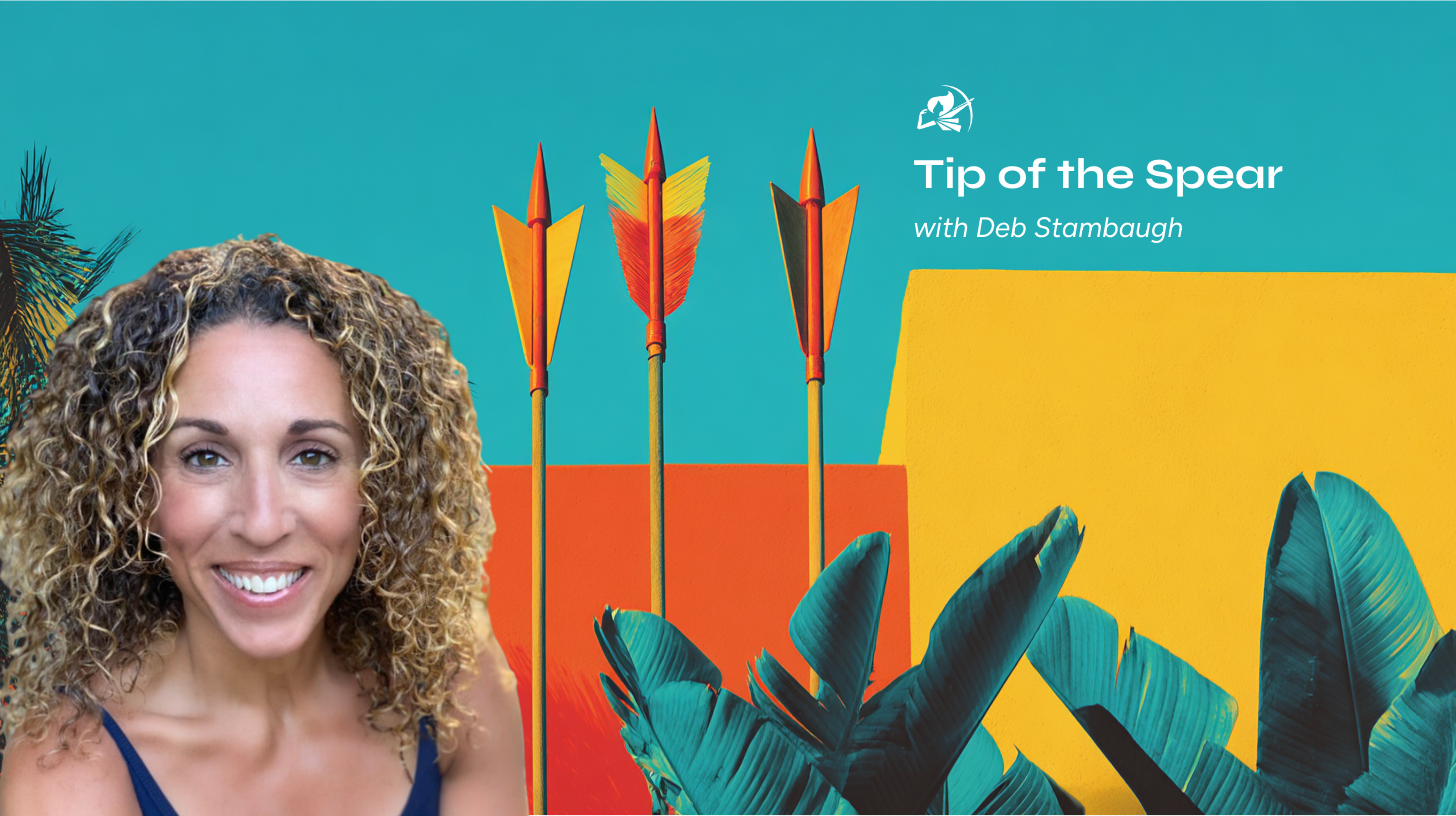
Tip of the Spear is an interview series highlighting The Artemis Fund’s expert network. Deb Stambaugh is a fractional CMO and Founder of Brave New World, with prior experience at IBM, Samsung Ads, and SAP.
Get The Artemis Fund’s stories in your inbox.
Get The Artemis Fund’s stories in your inbox.
Sign up for our newsletter
Q: You’ve worked at a lot of influential companies. What was one of your earliest roles, and what did it teach you about high-performing organizations?
A: One of my earliest formative roles was at IBM. I think I was about 28, where I was chief of staff to the global head of SMB marketing. Although I was junior, I was tasked with helping lead global marketing strategy and design across every region and geography. That meant navigating different cultures, levels of seniority, and ways of working, all while trying to orchestrate everyone around a single IBM way.
The biggest lesson I took away was that to drive change, you have to be an excellent communicator. Communicating doesn’t always mean talking. You have to listen deeply and communicate clearly and consistently. That lesson has paid forward in every role I’ve had since. In the work I do through my agency, Brave New World, communication and listening is central to my approach. I listen closely and focus on clear communication around goals, what we’re aiming at, and why. That enables all of us to get excited about the change we’re driving because we are all pulling in the same direction.
Q: What are some of the biggest structural shifts you’re seeing in B2B right now?
A: AI is a big one, but broadly I’m seeing a convergence of data, automation, and AI that’s making “data-driven” much more real for B2B organizations.
Data that used to be interesting but unusable is now becoming part of the product itself. It’s powering benchmarking, insights, and redesigned end-to-end workflows. Static offerings like product databases are becoming natural-language queryable. B2B is inherently complex, so this “smart stack” is helping organizations become truly data-driven.
The second shift I see is moving from product-first to problem-first thinking, and toward consolidating services under fewer providers. Customers want simplicity. They’re tired of juggling point solutions. In global corporate real estate, for example, customers are explicitly asking for integrated offerings. Retail media networks are another example. Brands want holistic solutions from a single provider.
The third shift is a renewed focus on brand, which is true across just about every industry, from tech to media to healthcare to pharmaceutical services. There has been a real swing back toward authenticity, emotion, and leadership recognizing that brand is central to sales and growth. Brand is so much more than colors and taglines. It is how you tell your story in a way that actually connects with people. My agency sees a lot of repeat business at the intersection of brand and sales enablement.
The last thing I’ll mention is the wave of layoffs over the past few years. Since the hiring frenzy during COVID, there’s now a lot of highly experienced talent in the market, especially in B2B. For early-stage leaders, that’s a real opportunity not to be overlooked.
Q: Let’s talk more about AI. What impact do you think it’ll have over the next three to five years?
A: In marketing, content generation is the obvious use case. We all use tools like ChatGPT now.
But I think there’s a deeper opportunity. Marketing has always been deeply connected to sales enablement for me. Awareness marketing is the easy part. Beautiful ads are great, but enabling sellers to actually communicate effectively is hard. People learn differently. AI can help personalize and scale enablement. For one of my clients, we’re exploring AI-powered simulators trained on their content. That same content can power sales, training, and education. It becomes a virtuous cycle.
Another major shift is discovery search. As LLMs are becoming a primary information source, brand and message consistency are more important than ever. You can’t just phone it in. If AI can’t confidently reference or explain you, you don’t show up, but your competitor will. It points to the need for strong persona work to surface and answer the questions buyers privately ask AI. That means LLM strategy alongside SEO, paid, and other channels is critical.
Q: Across your career, is there a consistent trait you see in resilient founders or leaders?
A: The strongest leaders are incredibly clear about goals, priorities, and the “why.” Just like marketing, leadership is storytelling. When teams understand what they’re doing and why, they become converts and supporters.
When everything feels like a fire drill, it creates uncertainty and paralysis. Great leaders keep priorities narrow and focused. There will always be more problems than you can solve. Leadership is about choosing where to aim.
The second trait is the ability to tell your story in simple, human language. Especially in complex industries, founders need to explain what they do in a way their mom or grandmother would understand.
As a founder, you are sales. You are also the face of the company. You have to do both.
Q: What mistakes do you see founders make early on in go-to-market?
A: The biggest mistake is not talking in the language of their customers. Often, and rightfully so, founders are so in love with their product that they lose sight of how they are helping to solve a customer problem. Everyone wants to plow through a 10-slide deck, which means they are focused on telling their story instead of listening.
Incentives are another big one. Show me how people are paid, and I’ll tell you how they behave. If you incentivize the wrong KPIs, you get the wrong behavior. Sales structure should focus on qualified pipeline and real meetings, not vanity metrics. ICP and positioning should always be simple, direct, and in the voice of the customer.
Q: What are signals that a founder is ready to bring on a marketing hire?
A: Early adopters are forgiving. Once you’re trying to scale, you need to invest in marketing. Many founders misunderstand marketing as a luxury. At its core, marketing is communication and storytelling that connects people to your vision and moves them to action.
Without it, sales isn’t repeatable, pipeline isn’t predictable, and success depends entirely on individuals (often the CEO). That’s not scalable.
Great marketers understand sales, product, finance, customer experience, onboarding, and talent. Marketing touches everything. From a CEO lens, investing in marketing helps you build a better organization.
Q: Is there a trend or company you’re especially excited about right now?
A: I get most excited about my clients’ businesses. I love how technology intersects with human behavior. From gaming to energy, every business has a unique story to tell and something that differentiates them. Unraveling that story into something that is clear and impactful is what gets me up in the morning.
I’m also excited about experiential. People want to be in person again. From pop-ups to live experiences, there’s so much innovation happening as people try to get off their phones and reconnect.
Q: What’s the best career advice you’ve ever received?
A: Talk to everyone. Go to the event, have the conversation. You never know what door it will open. A strong network builds a strong career.
I also believe in nonlinear career paths. Choosing roles because they’re interesting is okay. You’ll learn something at every turn.
And finally, my dad always said: if you don’t ask, you don’t get.
We believe once in a generation companies will be built by unexpected founders. If that sounds like you, pitch us here!

Newsletter Signup
